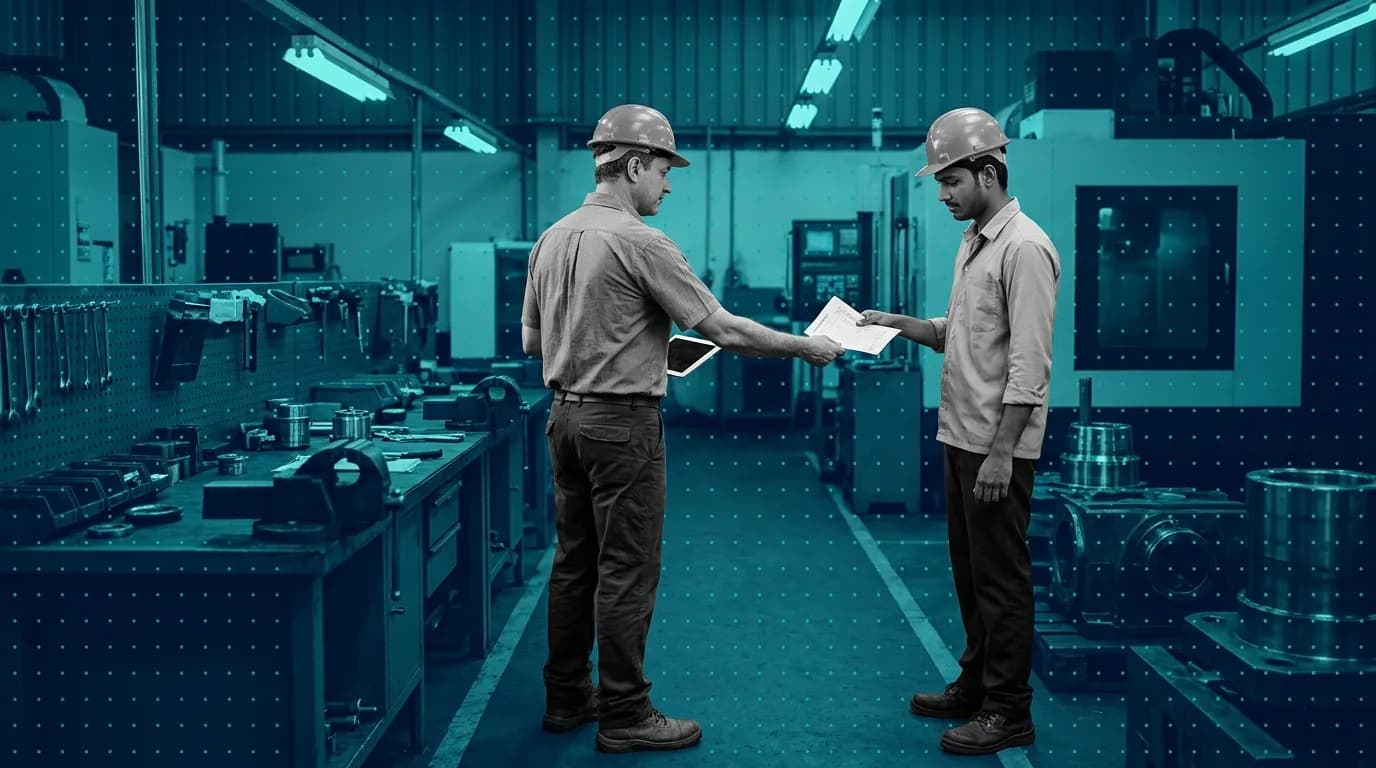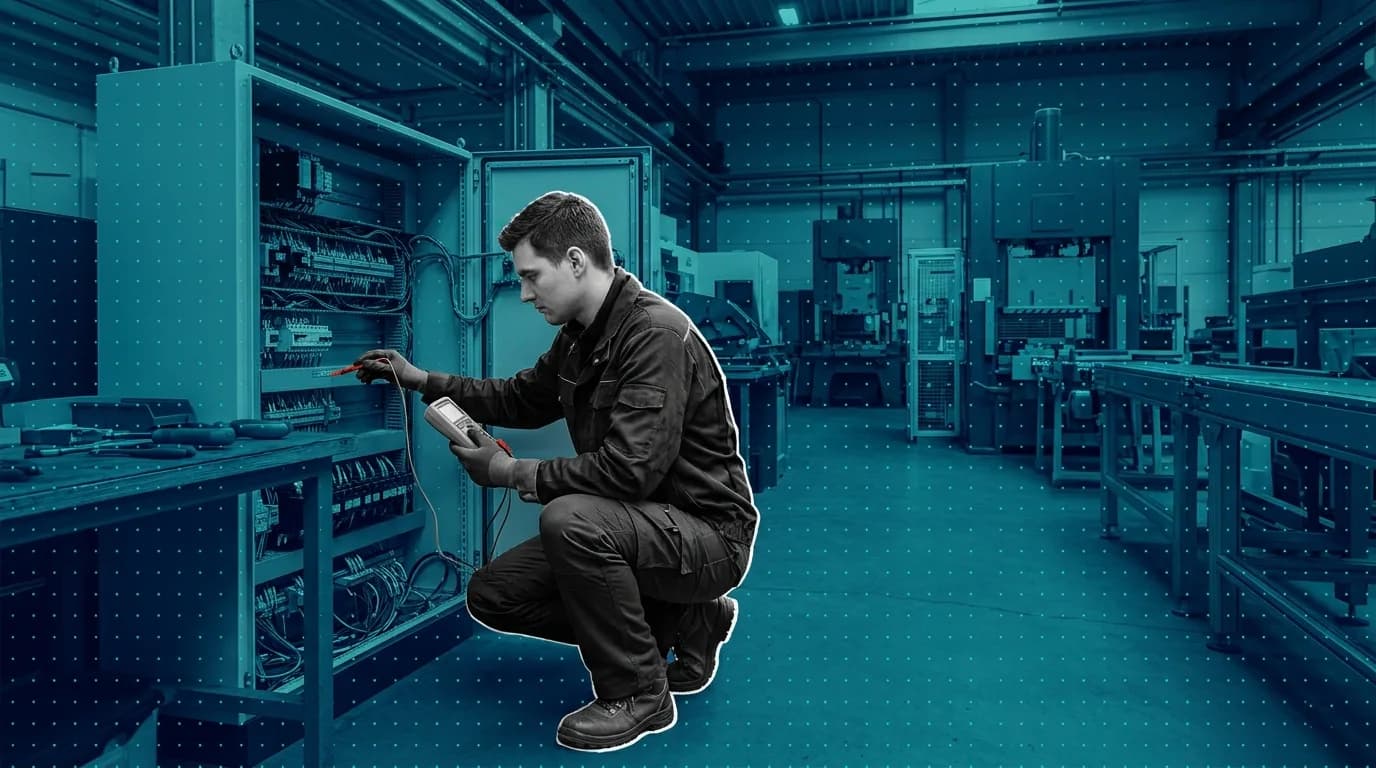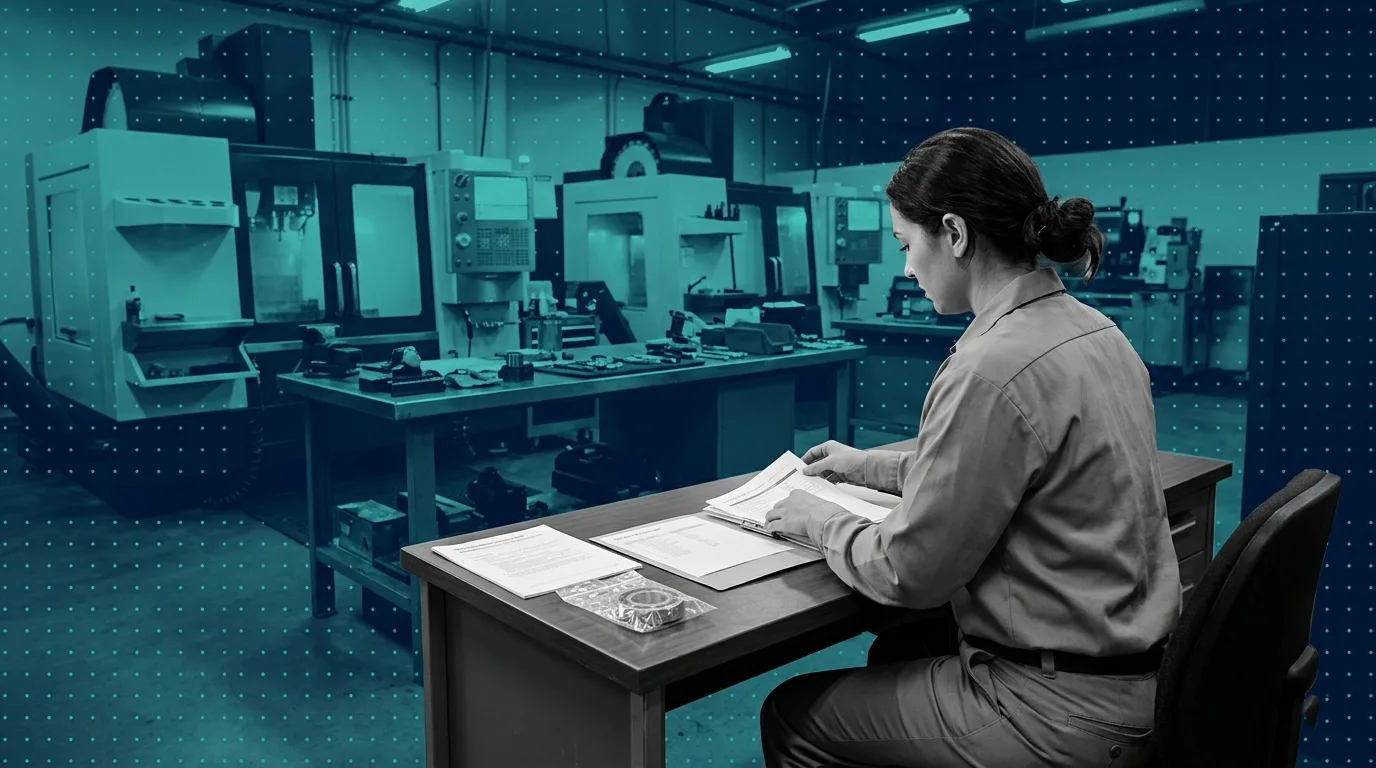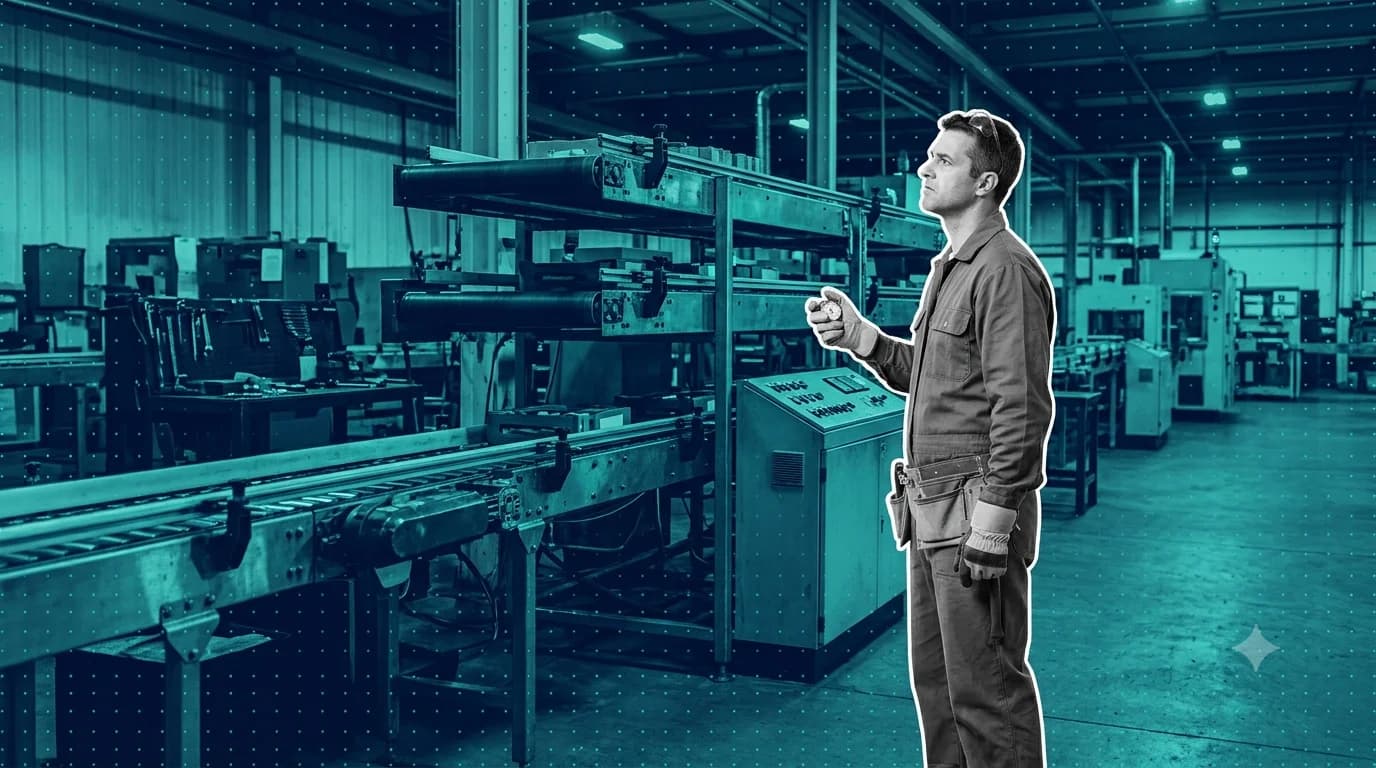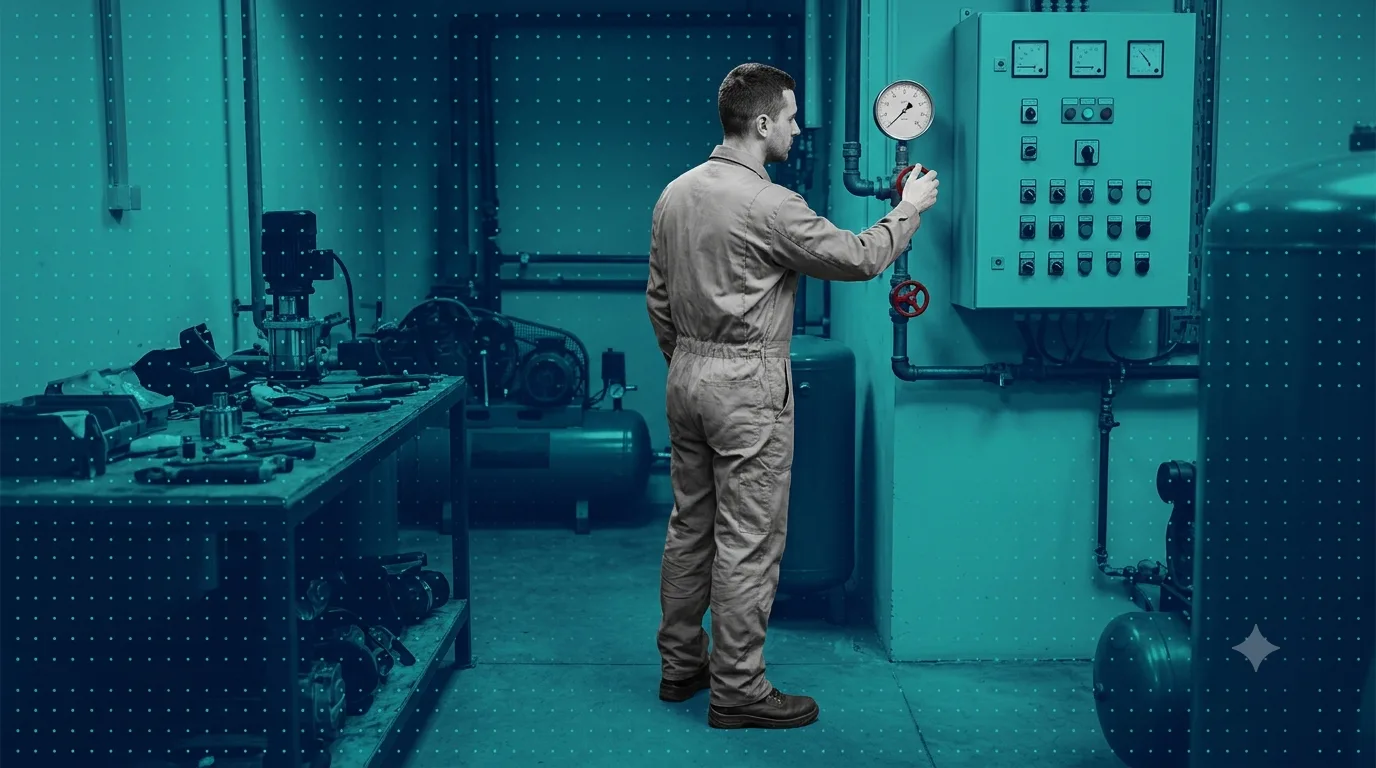

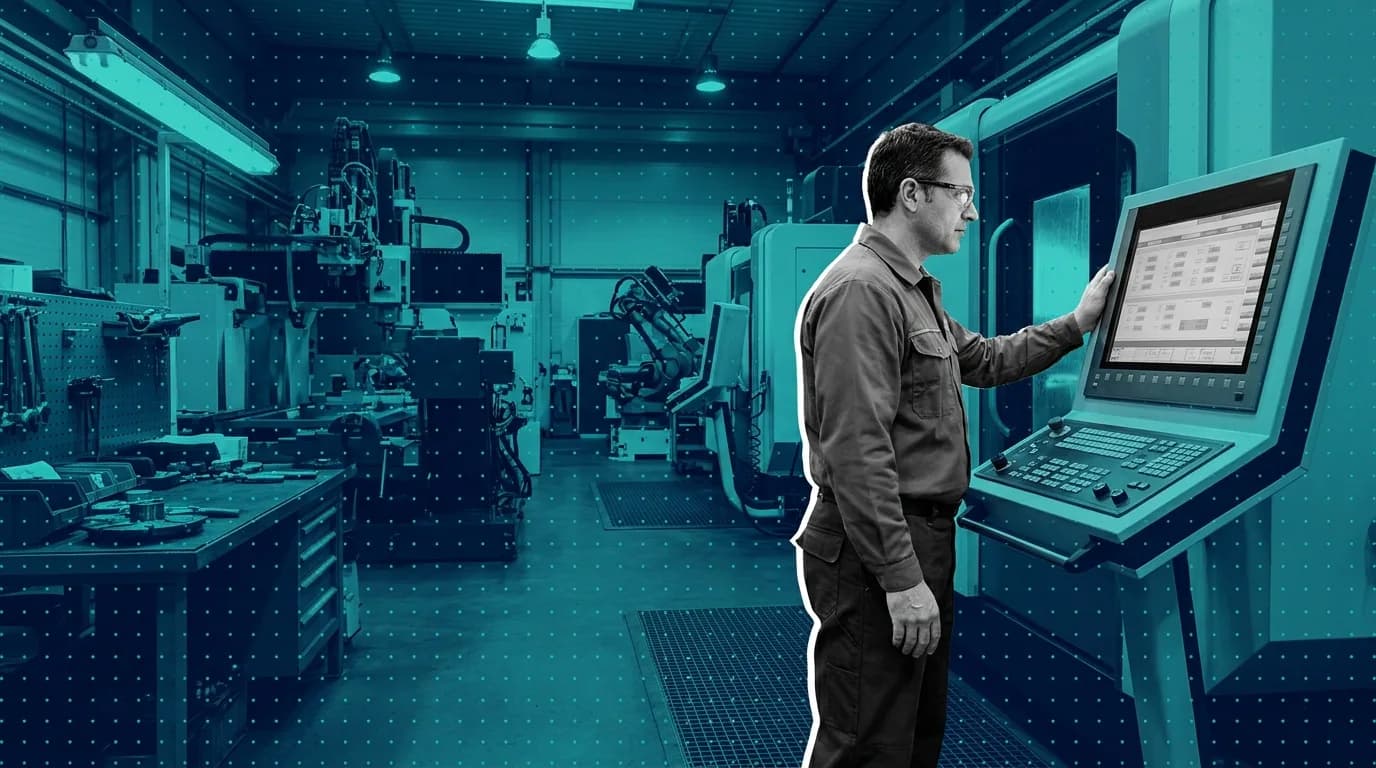
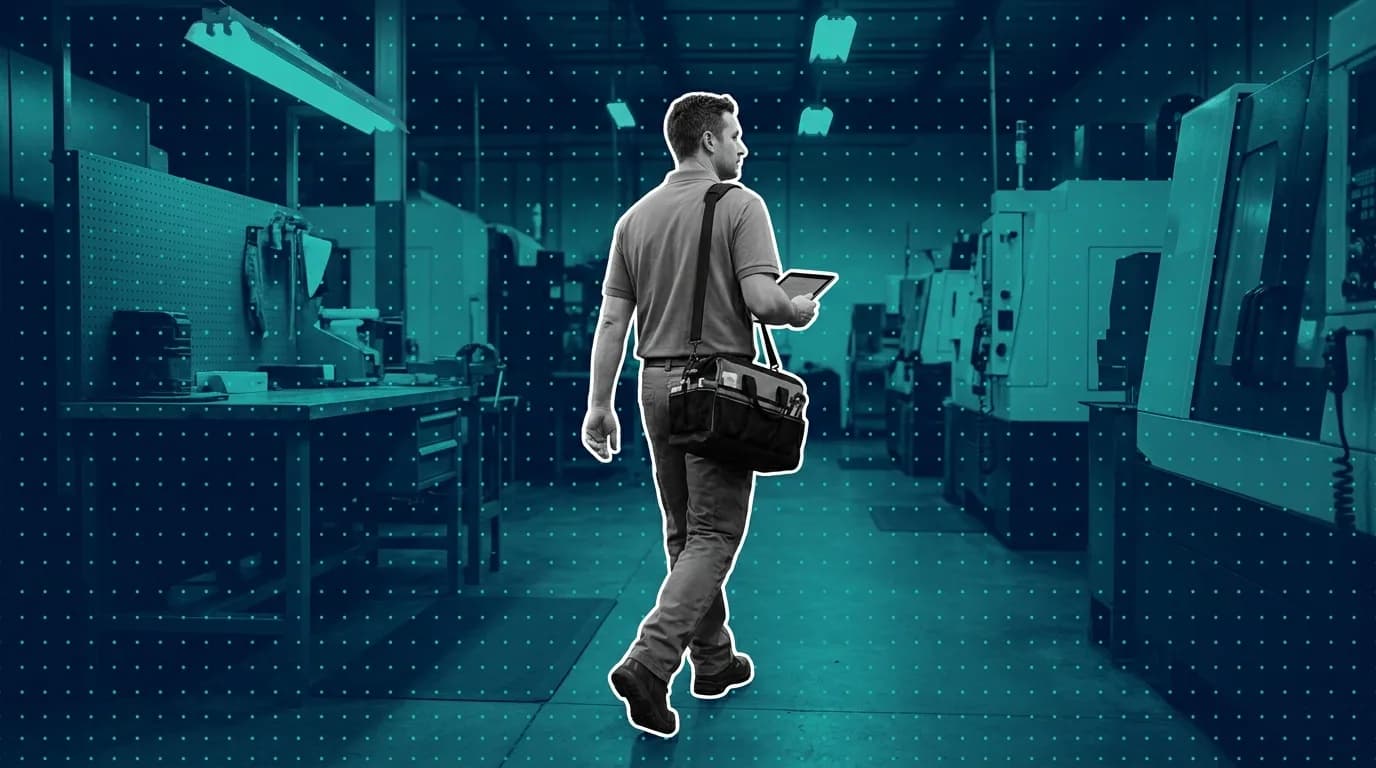

A manufacturing maintenance technician executes preventive maintenance on production equipment, responds to breakdowns, and tracks the parts and downtime that come with both. That's a different job from a building or facility maintenance technician fixing HVAC and plumbing — most generic guides describe the wrong role entirely. Written for the plant or maintenance manager evaluating or hiring one.
Core responsibilities on a production floor
- Executing scheduled PMs — following the checklist for a specific asset: lubrication, inspection, cleaning, adjustment, testing, on the interval it's due
- Responding to breakdowns — diagnosing the fault, making the repair (or escalating it), and getting the machine back to production as fast as safely possible
- Recording what happened — parts used, downtime, and root cause on every job, not just fixing the machine and moving on
- Flagging developing issues — noticing the vibration, the noise, the temperature that's not quite right yet, before it becomes a breakdown
- Following safety procedures specific to the equipment — lockout/tagout, guard interlocks, and permit requirements that a general facilities role rarely has to deal with at this level
This is a fundamentally different job from fixing a leaking faucet or a broken HVAC unit in an office building — which is what most "maintenance technician" guides online actually describe.
How this differs from facility/building maintenance technician roles
Nearly every generic guide to "what does a maintenance technician do" describes building-facilities work: HVAC systems, plumbing, flooring, general repairs in an office or apartment complex. That's a real job, but it's not the manufacturing-floor role.
A manufacturing maintenance technician works on production equipment specifically — CNC machines, conveyors, hydraulic presses, robotics, packaging lines — where a failure doesn't just inconvenience someone, it stops production. The stakes, the safety requirements (lockout/tagout, machine guarding), and the technical depth (hydraulics, PLCs, servo systems) are different from general facilities work, even though both roles share the title "maintenance technician."
If you're hiring for a production floor and evaluating candidates against a generic job description written for building maintenance, you're screening for the wrong skill set.
What makes a good manufacturing maintenance technician
Diagnostic patience over guesswork. The technician who swaps three parts hoping one fixes it costs more in downtime and inventory than the one who takes ten extra minutes to actually diagnose the fault. Speed matters, but not at the cost of guessing.
Records what they find, not just what they fix. A technician who notes "bearing was running hot, replaced, but check alignment next PM" gives the next person — often themselves — a head start. One who just closes the ticket loses that information permanently.
Comfortable saying "I need to escalate this." Not every technician can or should fix every fault. The ones who try to push through something outside their depth, rather than calling for help, are the ones who turn a two-hour repair into a two-day one.
Interview questions to ask when hiring one
"Walk me through how you'd diagnose a machine that's stopped without an obvious cause." Listen for a process — checking recent history, isolating variables, confirming before replacing parts — not a list of parts they'd swap.
"Tell me about a repair that took longer than it should have. What happened?" Every honest technician has one. What matters is whether they can identify what they'd do differently.
"How do you decide what to note down after finishing a job?" Tests whether they think about the record as part of the job, or as paperwork that happens after the real work is done.
In my own experience working alongside a plant's engineering and maintenance department, what separates a strong technician from a weak one shows up most clearly on breakdowns, not PMs — breakdowns are unplanned by definition, so there's no chance to prepare in advance. The technicians who diagnosed fastest weren't necessarily the most mechanically skilled; they were the ones who could quickly find the right specification or machine history to work from, instead of starting the diagnosis from scratch every time.
How MachDatum supports the technician's side of this
The work described above only produces useful data if recording it is fast enough that a technician actually does it consistently — on a phone, on the floor, not backfilled from memory at the end of a shift.
Where MachDatum fits: the mobile app puts the checklist, the asset history, and the parts list in front of the technician at the machine — QR scan to pull up the asset, log parts used against real stock, close the job with root cause and downtime captured as the work happens, not reconstructed later. We're onboarding our first group of manufacturing teams right now — see how it works at machdatum.com.
For the roles that work alongside a technician day to day, see our guides to the maintenance supervisor and maintenance planner, or the skills that matter most when hiring one.