
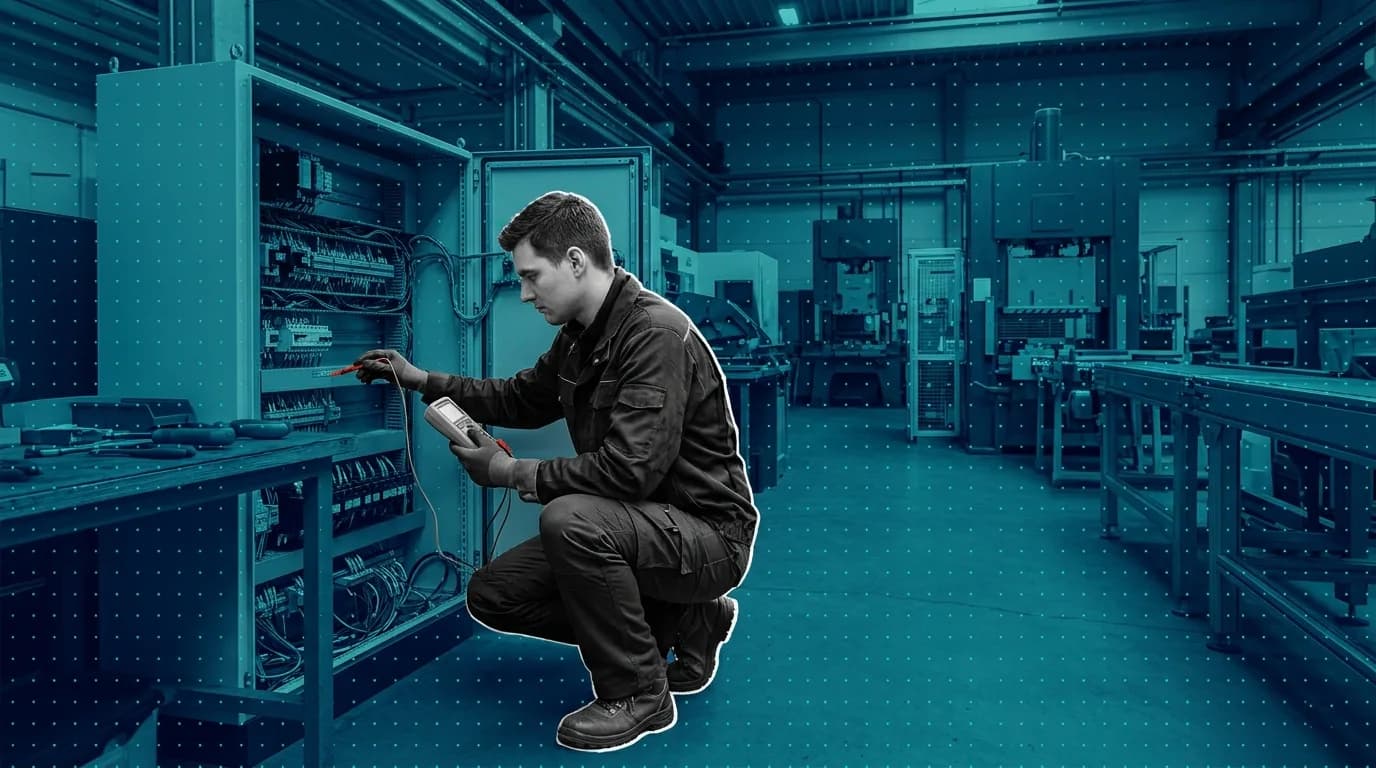

The skills that matter most for a manufacturing maintenance technician split into technical (mechanical, electrical, hydraulics, controls) and non-technical (diagnostic patience, documentation discipline, knowing when to escalate). Most guides to this list read like a resume template. This one is written for evaluating a candidate, not building one.
Technical skills
- Mechanical aptitude — understanding how mechanical systems (drives, bearings, couplings, conveyors) work and fail, not just how to turn a wrench
- Electrical troubleshooting — safely diagnosing faults in motors, control circuits, and panels; comfort with a multimeter beyond the basics
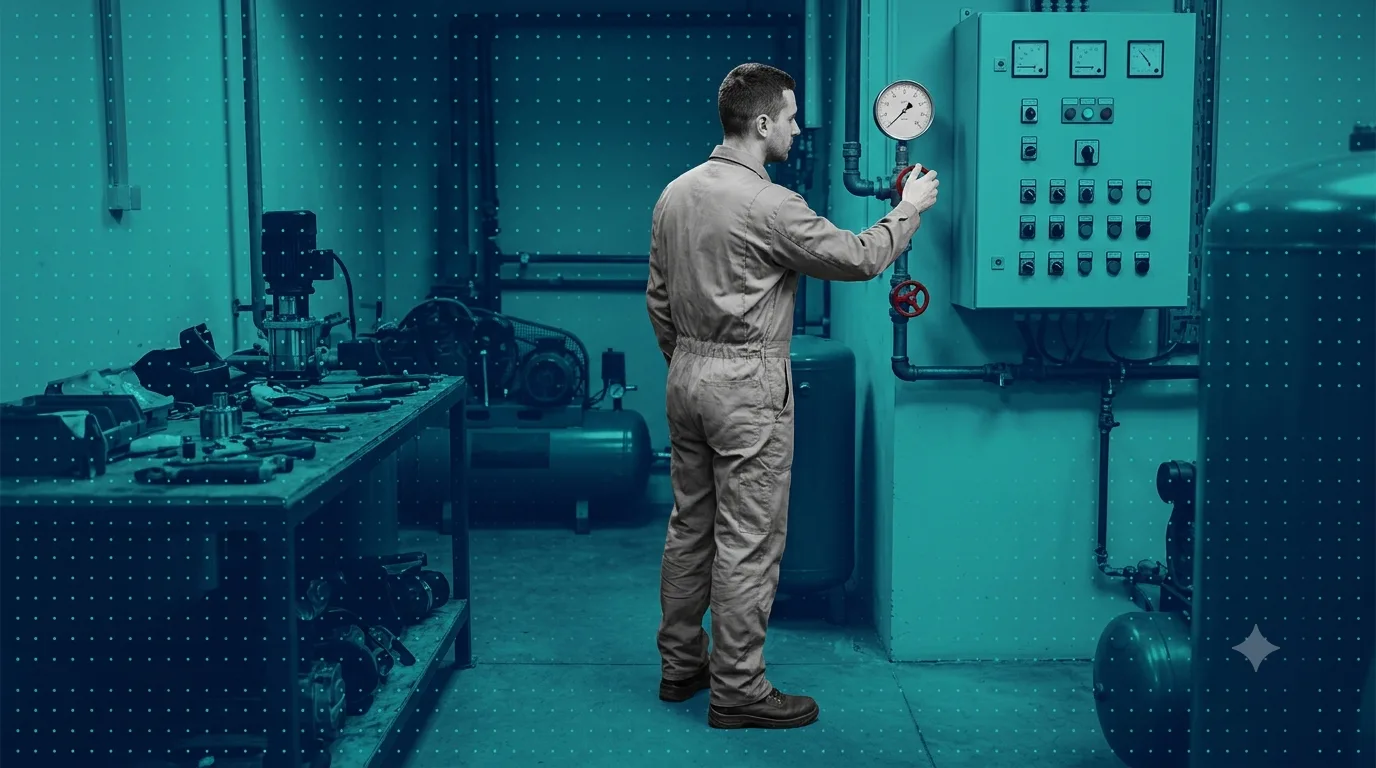
- Hydraulics and pneumatics — reading a hydraulic schematic, diagnosing pressure and flow problems, common on presses, injection molding, and material handling equipment
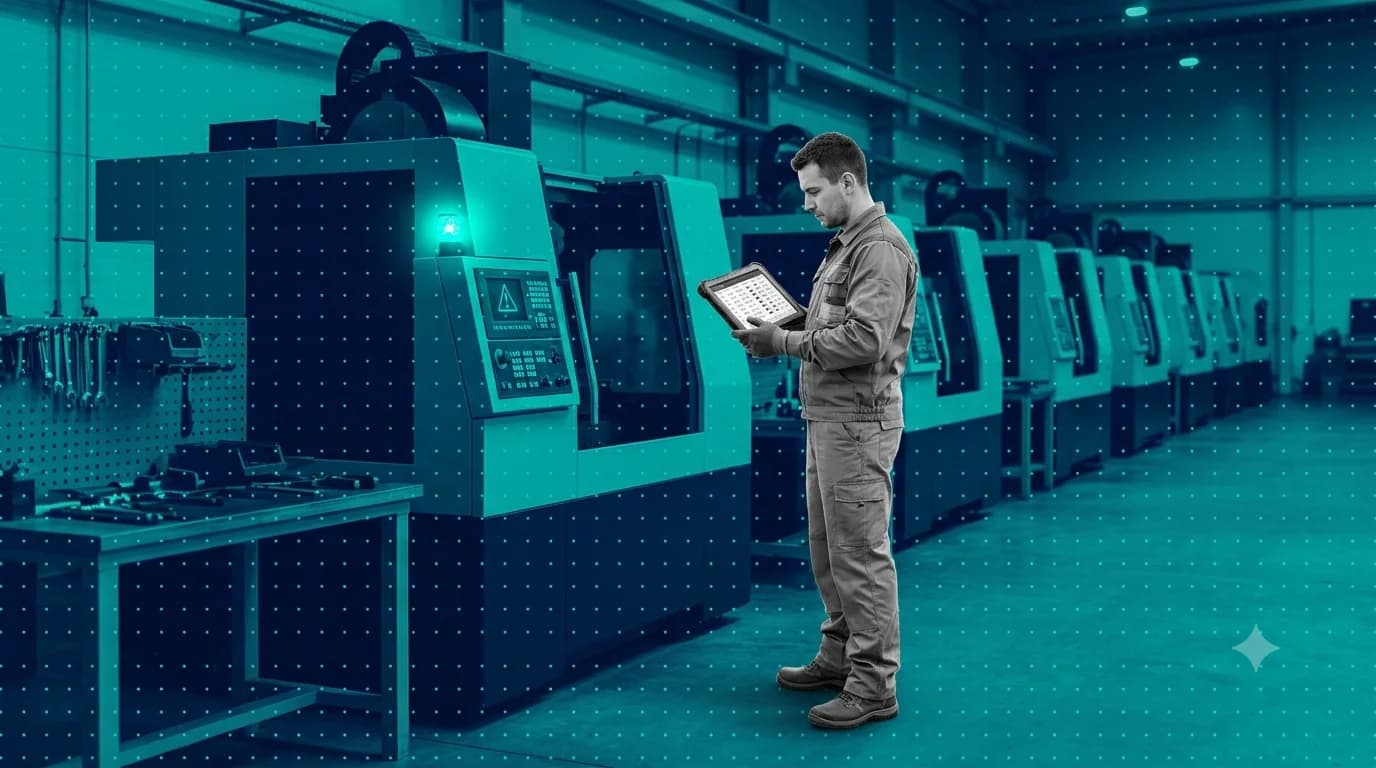
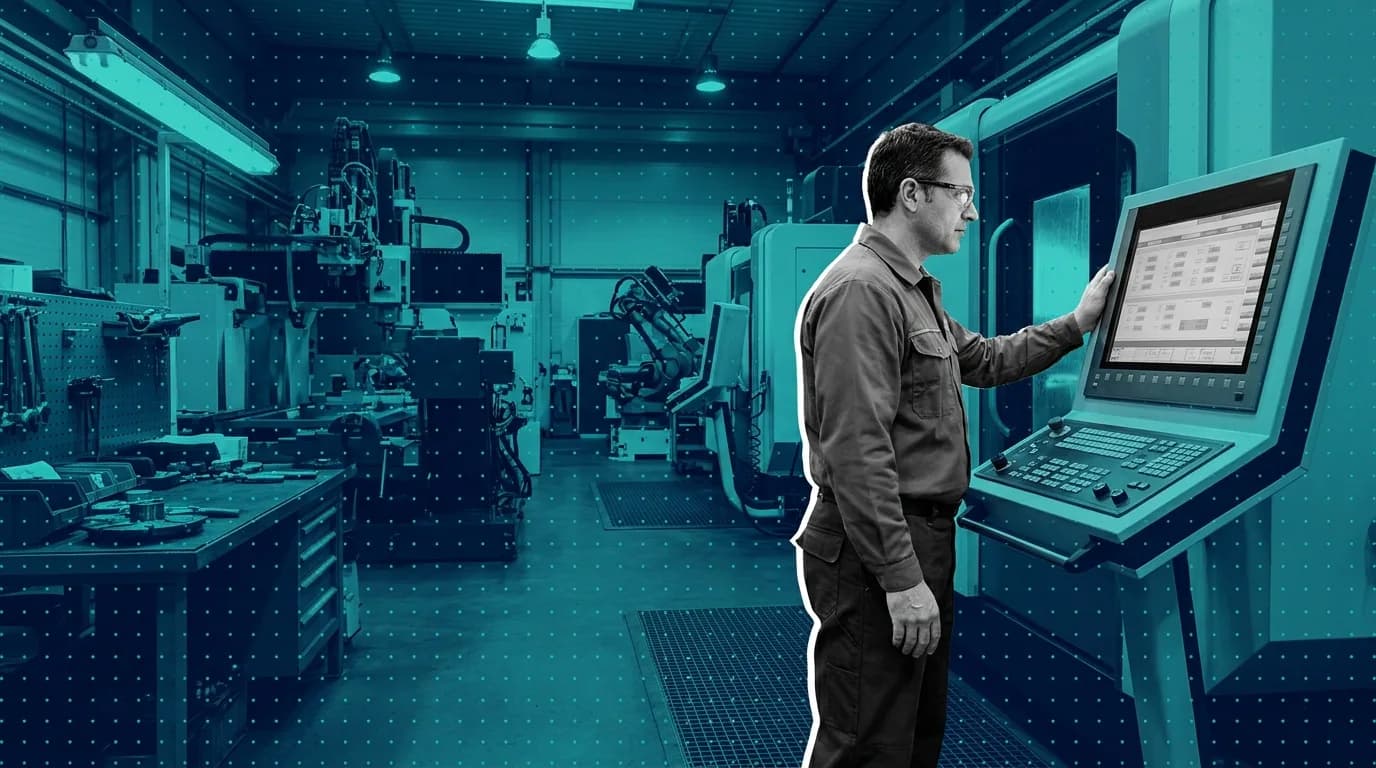
- Basic controls/PLC familiarity — not necessarily programming, but reading a fault code, understanding I/O, and knowing when a problem is mechanical versus a controls issue
- Precision measurement — calipers, micrometers, alignment tools — the difference between "close enough" and actually within tolerance
Which of these matter most depends heavily on the specific equipment in your plant. A technician strong on hydraulics but weak on controls is a good fit for a press shop, less so for an automated line heavy on PLCs and sensors.
The non-technical skills that actually predict success
Diagnostic patience. The technician who takes ten extra minutes to actually isolate a fault, instead of swapping parts and hoping, saves more time and inventory over a year than the one who moves fast but guesses.
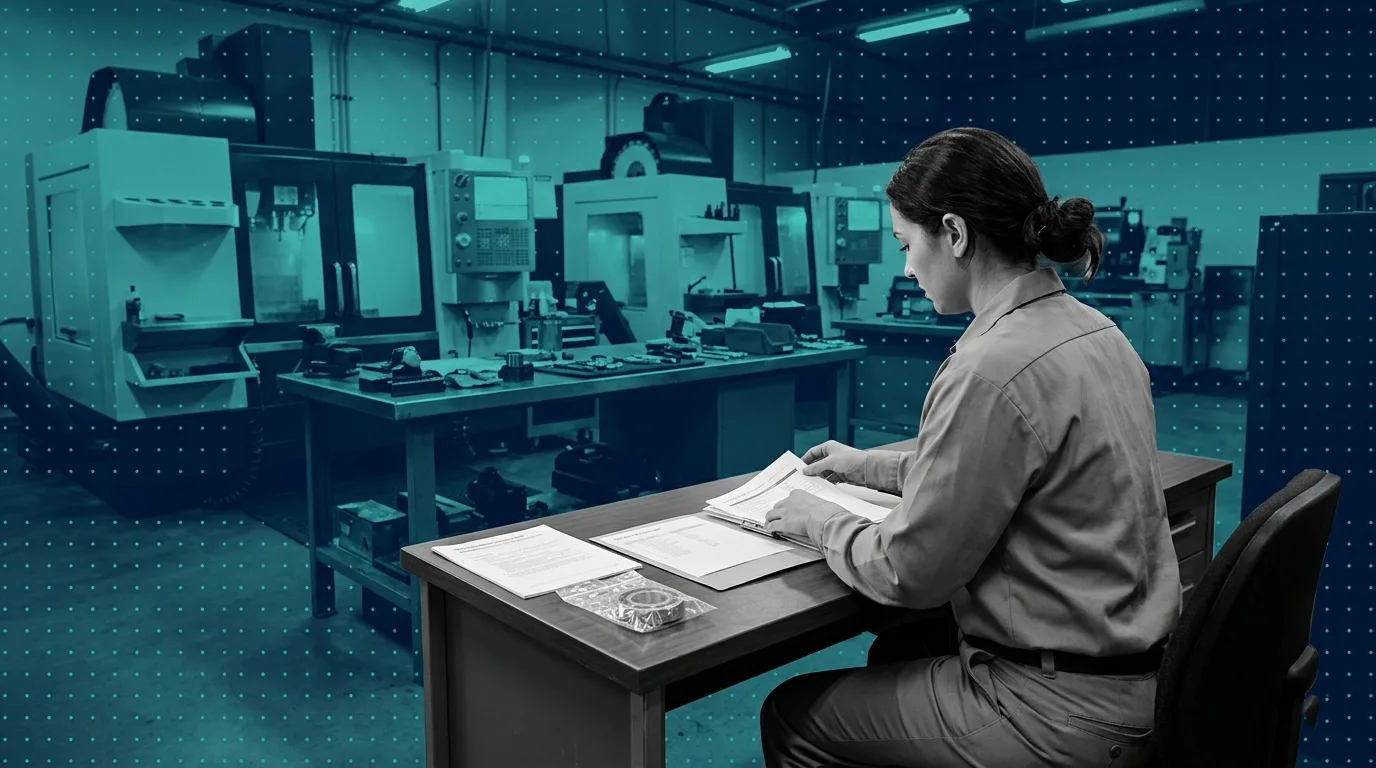
Documentation discipline. Recording what was actually found and done — not just closing the ticket — is what turns individual repairs into a maintenance history anyone can learn from. This is consistently the skill that's hardest to teach and easiest to overlook in an interview.
Knowing when to escalate. Not every technician can or should handle every fault alone. The ones who push through something outside their depth instead of calling for help turn manageable jobs into extended downtime.
In my experience, the skill that actually separates strong technicians from weak ones is the ability to pull together inputs from the people on the floor, the machine itself, and the documentation, then form a quick hypothesis and test it — rather than working a fixed checklist or swapping parts and hoping. It's a non-technical skill more than a technical one, and it's the hardest one to screen for on a resume.
How to evaluate these skills in an interview, not just a resume
A resume tells you what equipment someone has touched. It doesn't tell you how they think through a problem. A few ways to actually test for it:
Ask them to walk through a real fault, not describe their experience. "A conveyor motor trips on startup, no obvious cause — walk me through what you'd check first." Listen for a sequence, not a guess.
Ask what they'd document after a job, unprompted. Candidates who immediately mention root cause and parts used are demonstrating the documentation habit directly. Candidates who only mention "fixed it and moved on" are showing you the gap.
Ask about a time they were wrong. A technician who diagnosed something incorrectly and can describe what they missed is more trustworthy than one who claims they've never gotten a diagnosis wrong.
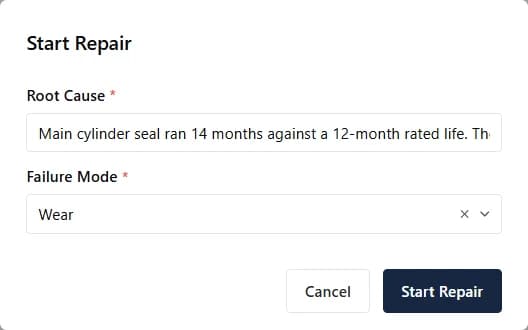
Where MachDatum fits: every closed work order carries the technician's root cause and parts used — which means a technician's actual documentation habits are visible in their work history, not just claimed in an interview. Onboarding a new hire is faster with checklists and asset history already in the app instead of tribal knowledge. We're onboarding our first group of manufacturing teams right now — see how it works at machdatum.com.
For the roles that work alongside a technician day to day, see our guides to the maintenance supervisor and maintenance planner, or what the role covers on a manufacturing floor.