

An overhaul is a major planned maintenance event in which equipment is fully taken apart, inspected, has its worn or damaged parts replaced or reconditioned, and is reassembled and tested to bring it back close to its original specification. It's deeper and much less frequent than routine preventive maintenance, and it's planned well in advance because the machine has to come out of production.
Overhaul meaning
In everyday English, to overhaul something just means to examine it thoroughly and fix whatever needs fixing. People overhaul a car, a website, or a tax code. In industrial maintenance the word is narrower: a planned, structured restoration that needs a production shutdown.
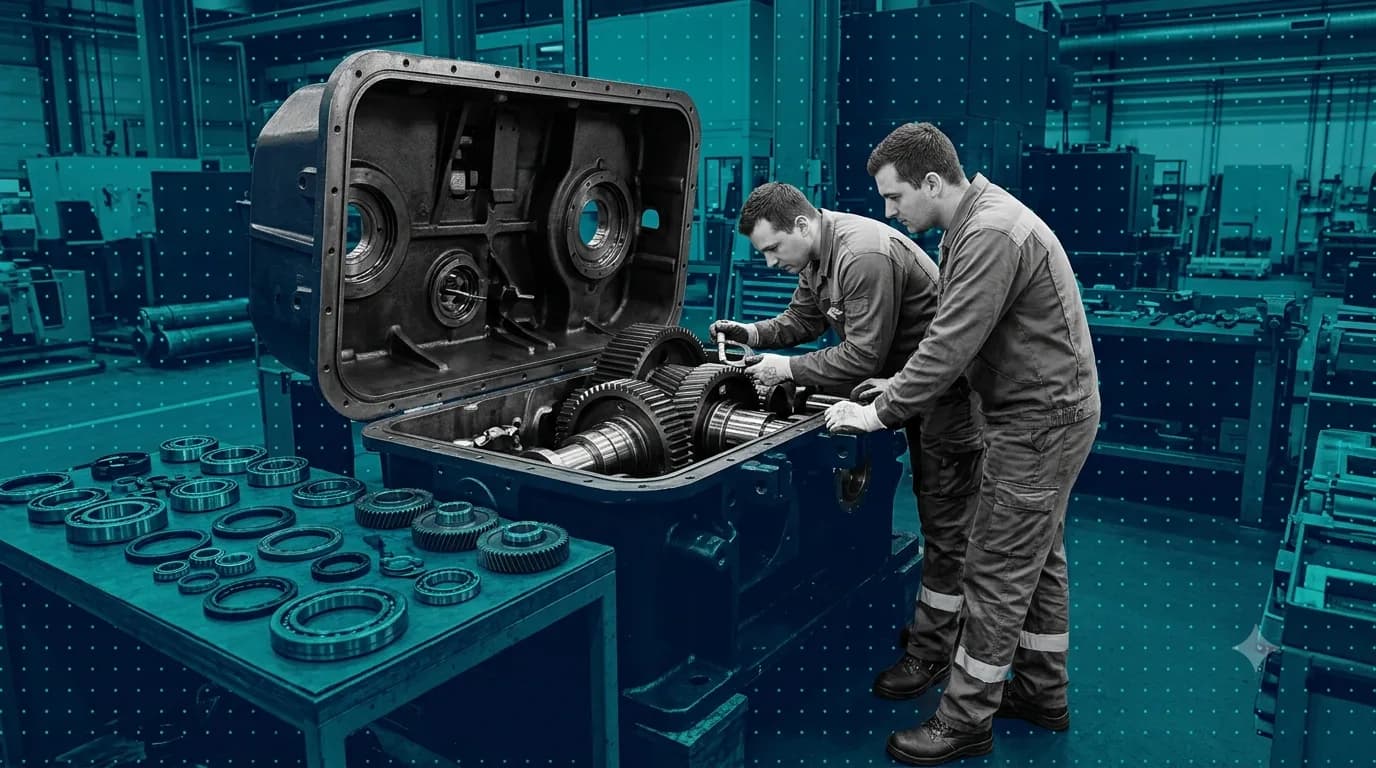
Overhauling an asset means taking it apart, checking every component against its wear limits, replacing or reconditioning whatever is no longer fit for service, putting the machine back together to spec, and proving it under controlled conditions before it goes back into production. The result is a machine that performs close to how it did when it left the manufacturer. It's not perfect, but it's been reset.
A technician who changes a filter and tops up oil has done routine servicing. A team that spends four days stripping a standby generator down, measuring every clearance, replacing every worn seal, and load-testing it before putting it back on standby has done an overhaul.
What an overhaul involves
The sequence is the same whatever the machine.
Disassembly of the equipment, or of the major sub-assembly being overhauled. Disassembly is already part of the diagnosis. The condition of the fasteners, any wear debris, and the state of the seals all tell you something before the formal inspection starts.
Inspection of every component against defined wear limits. That means micrometers, bore gauges and feeler gauges for dimensions, visual checks for cracks, corrosion and surface damage, and non-destructive testing (dye penetrant, ultrasonic) where hidden cracks are a concern. An inspection without acceptance criteria is just a look. The procedure has to say what a pass looks like.
Replacement of everything near the end of its life, not only what has already failed. This is what separates an overhaul from a repair. A repair fixes what broke. An overhaul replaces whatever is worn, cracked, corroded, or close to its limit, whether it has caused a failure yet or not. Seals, bearings, belts, gaskets and filters are usually replaced as a matter of course.
Reconditioning of major components where replacing them doesn't make economic sense. A scored hydraulic cylinder bore can be re-honed. A degrading motor winding can be rewound. A worn shaft journal can be built up and reground to size. Reconditioning extends the life of expensive parts that would otherwise need replacing.
Reassembly to specification, not by feel. Every torque value documented, every clearance measured and recorded, alignment checked with dial indicators or laser alignment tools. Shortcuts at reassembly cause the next failure, so the procedure has to be as detailed going back together as it was coming apart.
Testing and run-in before the machine returns to production. A generator overhaul ends with a load test across its rated output. A hydraulic press overhaul ends with a pressure test and a trial run at controlled cycle rates. Testing is the proof of the work. It catches reassembly mistakes before they turn into production stoppages.
Typical factory examples: the annual overhaul of a standby diesel generator (engine strip-down, bearing inspection, injector testing, governor calibration, load test); a major hydraulic press overhaul (pump, valve block, cylinders and all seals replaced, then pressure-tested to rated pressure); or a CNC machining center spindle overhaul (new bearings, alignment check, speed and runout test across the full range).
Types of overhaul
Manufacturing maintenance uses three levels, and the difference matters for scheduling and budgeting.
Minor overhaul. A partial teardown aimed at the sub-assemblies and wear parts that reach end of life on a shorter cycle. Seals, bearings, belts and filters are replaced based on service life or inspection. The machine isn't fully stripped. Covers come off, the relevant assemblies are exposed, the work is done, and it goes back together. It usually takes a day or two rather than a week, and it happens more often.
Major overhaul. A full teardown, inspection of every component, and replacement of everything worn or near its limit. This is what most people mean when they say "overhaul." Downtime runs from days to weeks depending on the machine. On critical equipment such as large compressors, main press lines and primary generators, it's typically planned every year or two and timed to a plant shutdown or a low-demand period.
Top overhaul (engines and compressors). Work limited to the upper section, meaning cylinder heads, valves and pistons, without removing the crankshaft or base. It needs less downtime than a major overhaul and is done in between major overhauls. The crankshaft and main bearings stay in place, and their condition is usually checked with oil analysis and vibration readings instead.
Picking the right level for a given asset at a given point in its life is part of planning the overhaul.
Overhaul vs repair vs preventive maintenance
The three terms get used loosely. They shouldn't be.
| Repair | Preventive maintenance | Overhaul | |
|---|---|---|---|
| Trigger | Something has failed | A schedule (time, usage or condition) | An OEM interval, a performance decline, or an age milestone |
| Scope | The failed part or system | Defined tasks: lubricate, inspect, clean, replace wear parts | Full or partial teardown of the machine |
| Downtime | Unplanned | Planned, usually hours | Planned, usually days to weeks |
| Result | Running again | Wear slowed, early faults caught | Restored close to original condition |
Preventive maintenance runs on short intervals, weekly, monthly or quarterly. The machine stays in production apart from planned stops of a few hours. The PM checklist for a hydraulic press might cover oil level, filter condition, pressure reading and seal inspection, all done and back in production the same day.
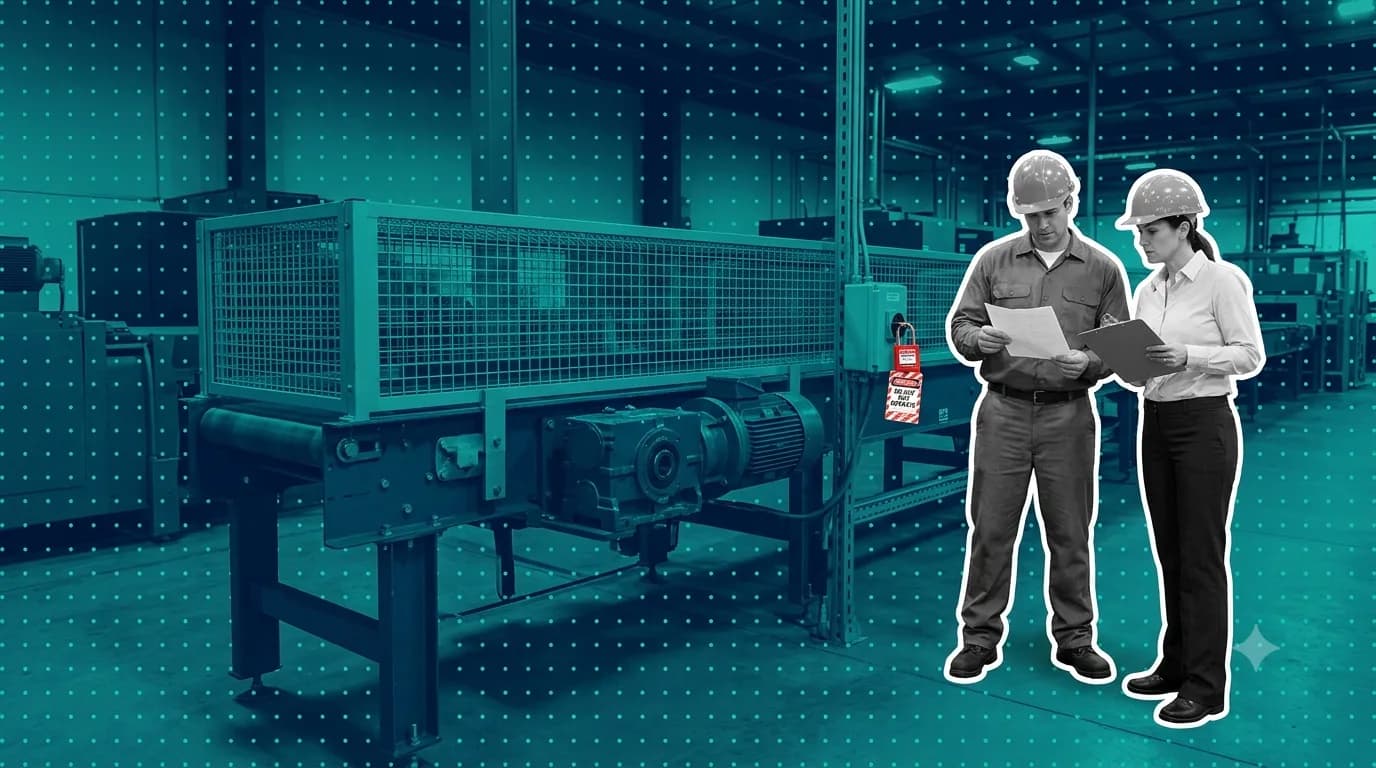
An overhaul needs a planned shutdown, often of several days. It doesn't sit on the monthly PM schedule. It's planned separately as a major maintenance event with its own work order, parts list, and shutdown coordination with production planning.
The two support each other. Good PM stretches the interval between overhauls. Consistent lubrication slows bearing wear. Scheduled seal changes keep contamination out of the hydraulic circuit. Faults caught at a monthly PM don't build up into the kind of damage only a full rebuild can fix. For the wider picture of maintenance strategies, see types of maintenance.
When to plan an overhaul
Four signals that one is due.
The OEM interval. Most manufacturers specify an overhaul interval in operating hours or years, something like "full overhaul at 10,000 hours or 5 years, whichever comes first." That's the baseline. Going past it should be a deliberate decision based on condition data, not because the machine seems fine or the shutdown is inconvenient.
A declining performance trend. Quality or throughput keeps slipping even though routine PMs are done on time. Cycle times creep up, tolerances drift, rejects rise. When the decline can't be traced to one fixable fault, it's usually many components running at the bottom of their tolerance range together, and an overhaul resets that baseline.
Breakdowns getting more frequent. When a machine's MTBF has been falling for several months and root cause analysis on the individual breakdowns keeps pointing to general wear rather than one part, an overhaul may be the right fix. Replacing one bearing or one seal at a time on a machine that's wearing out across several assemblies treats symptoms, not the condition.
An age milestone. For equipment without condition monitoring, a time-based overhaul is a sensible backstop. It's a cruder trigger, but it stops the common pattern of putting off an overhaul indefinitely because the machine hasn't fully stopped yet.
One honest caveat: not every asset deserves an overhaul. Where a replacement is cheap and a failure doesn't hold up production, running it to failure and replacing it is often the better call. That's breakdown maintenance used on purpose. Save overhaul planning for assets where an unplanned breakdown costs far more than planned downtime: critical production equipment, safety-critical assets, and machines with long lead times for replacement.
How to plan an overhaul
Agree the shutdown with production. A major overhaul needs planned downtime, so it's a coordination job as much as a maintenance job. For critical assets, agree the window with production planning well ahead, ideally lined up with a scheduled plant shutdown, a quiet period, or the end of a production run.
Kit the parts in advance. List every part that will be replaced, meaning the standard kit plus anything flagged at recent PMs, and get it on site before the shutdown starts. An overhaul that stalls halfway because a seal kit has a six-week lead time costs far more in extra downtime than the seal kit was worth. For a repeat overhaul, the parts list should come straight from the last overhaul's work order.
Write the procedure. The overhaul procedure should be a step-by-step document covering disassembly order, inspection criteria with tolerance values, torque settings and clearances for reassembly, and the test protocol. The first overhaul of an asset is often where this procedure gets written. Every later overhaul follows it and improves it. An overhaul without a procedure depends on one technician's knowledge, and that leaves when they do.
Record everything. Every component inspected, every measurement, every part replaced, every test result goes into the work order history for that asset. It's the evidence an auditor asks for, the baseline the next overhaul is measured against, and the data for adjusting the interval. If a part keeps wearing out early, or keeps passing with plenty of margin, that should feed back into the PM tasks and the next overhaul's parts list.
Where overhaul records connect to maintenance software
An overhaul generates more useful information than almost any other maintenance job, and most of it ends up in a folder nobody opens before the next one.
In MachDatum, an overhaul runs as a work order against the asset, with the procedure attached as a checklist. Checklists are versioned, so you can see exactly which version of the procedure was followed on a given date, and every completed overhaul stays in the asset's history. When the next one comes around, the last parts list, measurements and findings are on the asset record instead of in someone's memory.
If your overhaul records live in a binder, see how MachDatum CMMS handles asset history.